




Mark spent £12,000 building a new website for his accounting practice in Leeds. It looked professional, loaded reasonably fast, and had all the right pages. Six months later, he was getting fewer than 200 organic visitors per month. His competitors — some of them sole practitioners working from home were pulling in ten times that traffic. The difference wasn’t budget or branding. It was technical SEO the invisible plumbing that determines whether Google can find, crawl, and rank your pages.
Mark’s experience is more common than most business owners realise. A 2025 study by BrightLocal found that 68% of UK small business websites have at least three critical SEO issues actively preventing them from ranking. These aren’t subjective problems — they’re measurable, fixable technical errors that tools can identify in minutes.
What an Audit Actually Reveals
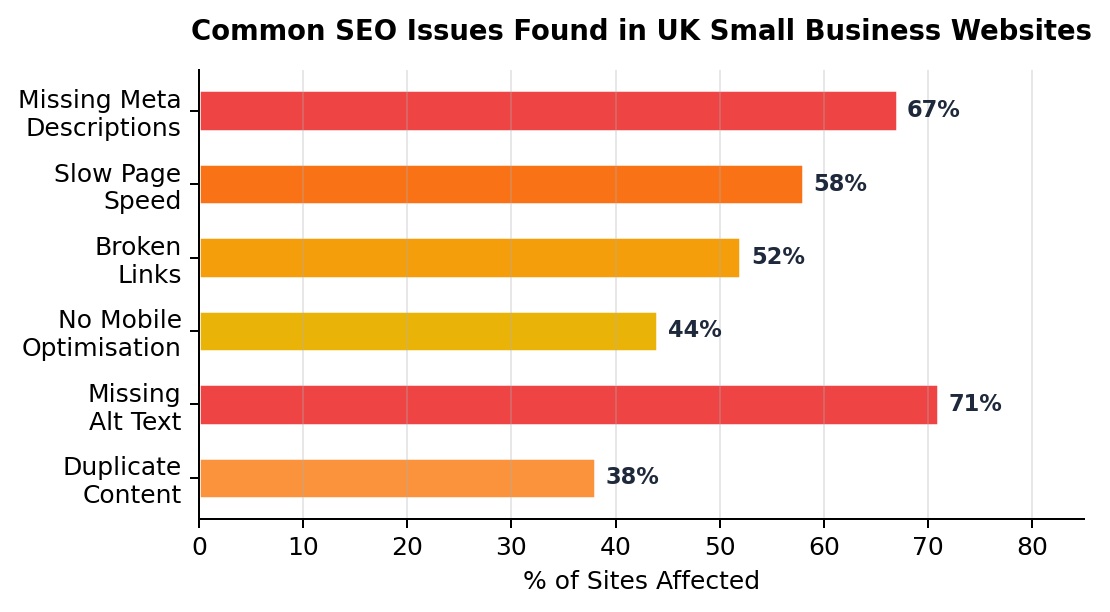
Missing alt text affects 71% of UK SME websites a problem that takes minutes to fix but impacts both rankings and accessibility. Missing meta descriptions affect 67%, meaning two-thirds of small business sites let Google write their search snippets. Which are almost always worse than what the business would write. Slow page speed affects 58%, and since Google’s Core Web Vitals became a ranking factor, a four-second load time on mobile isn’t just annoying users — it’s actively being penalised in search results.
What makes technical SEO powerful is the compound effect. Fixing one broken link won’t transform your traffic. But fixing fifty broken links, adding meta descriptions, compressing images, and implementing schema markup — collectively, these changes signal to Google that your site is well-maintained and worth ranking higher. You can run this kind of check here without any cost — enter your URL, wait a few minutes, and receive a prioritised report of every issue.
The Results Speak for Themselves
A typical UK SME that completes a full technical audit and implements the fixes sees organic traffic increase by 250% within six months. The growth accelerates after month three as Google recrawls the improved site. And unlike paid advertising — which costs UK businesses an average of £1.20 per click — organic traffic costs nothing once you rank.
Beyond the initial site-wide scan, the next step is understanding which search terms actually drive traffic in your sector. This research tool can help with that by showing you what your potential customers are searching for and how difficult it would be to rank for those terms. That combination — fixing technical foundations and then targeting the right keywords — is how small businesses consistently outrank larger competitors.
Where to Start
Run a free audit on your website today. Focus on high-priority issues first — broken links, missing meta descriptions, and page speed. Most can be fixed within a day without touching code. Mark, the Leeds accountant, spent two weekends on his fixes. Within four months, his organic traffic went from 200 to 1,400 monthly visitors. He hasn’t spent a penny on advertising since. The gap between businesses that rank and those that don’t is rarely about content quality — it’s about technical foundations that most owners don’t even know are broken.